



The Reindeer: Lapland's Iconic Creature
Let’s be clear: Lapland belongs to the reindeer! With around 200,000 of them living in Finland’s northernmost region, they outnumber humans by roughly 15 percent. Reindeer are not just part of nature, they are part of everyday life. You might see them crossing roads, grazing quietly in the forests, taking part in traditional herding with local families. Their presence shapes the rhythm of life and gives the region its unique character. Undoubtedly, they are Lapland’s most iconic creatures. So if you are planning to explore their territory, it is only fair to get to know them a little better. Lucky for you, this article is a great place to start.
Meet the Finnish Lapland Reindeer
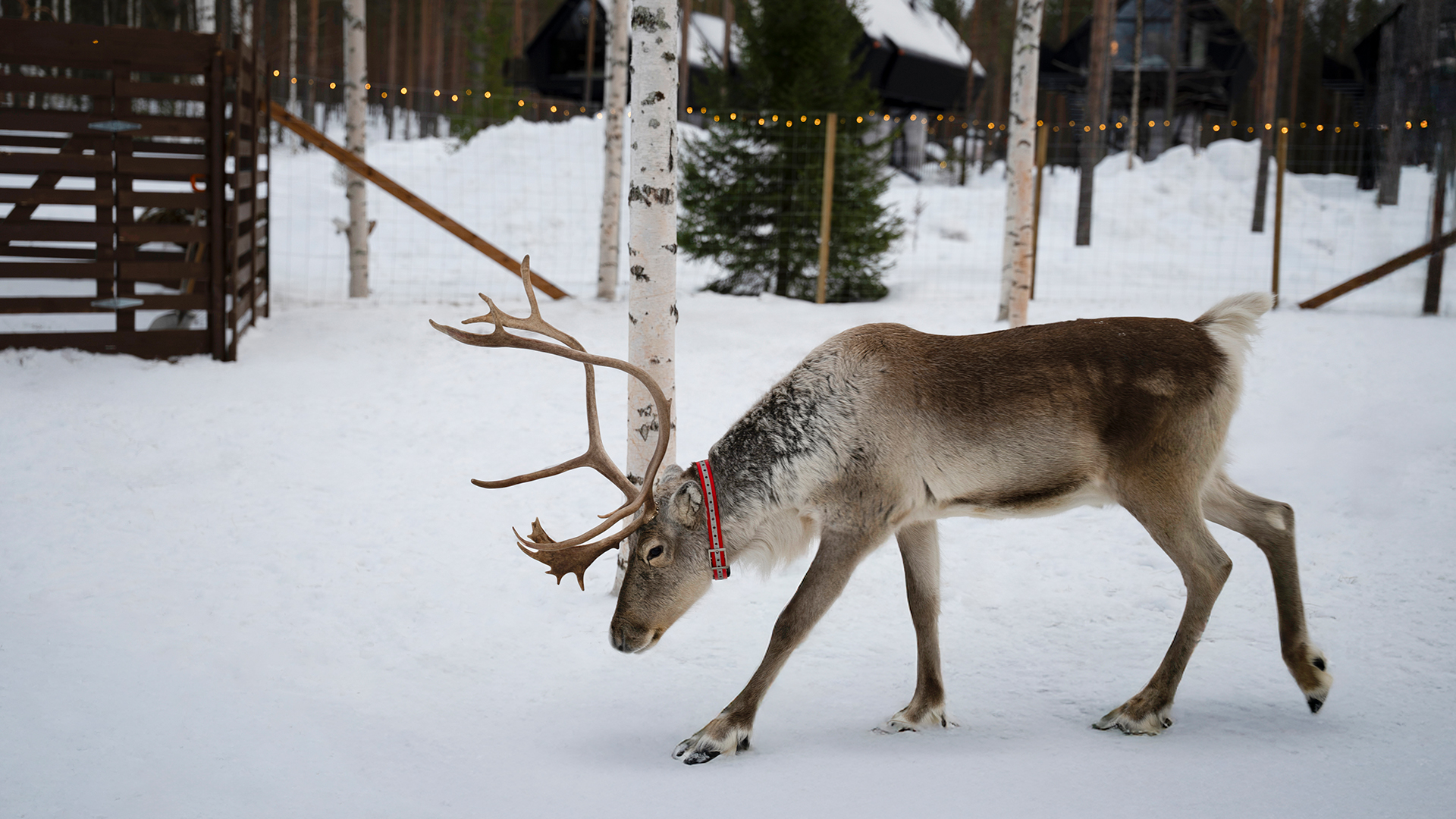
Reindeer belong to the Cervidae family, together with deer, elk, and moose. Like all cervids, they have long, slender legs and cloven hooves which are uniquely adapted to life in the North. Reindeer hooves are especially remarkable: in winter they contract and harden to give extra grip on icy undergrounds, while in summer, they spread out and become softer, helping them to move across soft ground, moss and tundra. Reindeer are also excellent swimmers, which helps them during seasonal migrations.
Not all reindeer in Finnish Lapland are the same. Their appearance and behaviour vary depending on whether they live in the open fell landscapes up north or in the forests that stretch across much of the region. Some areas in the far north of Scandinavian Lapland are home to northern reindeer, which travel in large herds and cover long distances, though in Finnish Lapland they are relatively rare. Most reindeer here are semi-domesticated forest reindeer, moving shorter distances in smaller groups. They are usually slimmer, with longer legs and wider hooves that allow them to move quietly and efficiently through wooded terrain. Their fur also reflects their environment: northern reindeer tend to be lighter and greyer, blending into treeless landscapes, while forest reindeer are darker to match the dense forests around them.
Adapting to the Arctic
Reindeer are true masters of survival in the Arctic. Their bodies are engineered to withstand the extreme cold, navigate snowy landscapes, and thrive in the seasonal rhythms of Lapland.
Antlers: Grow, Shed and Repeat
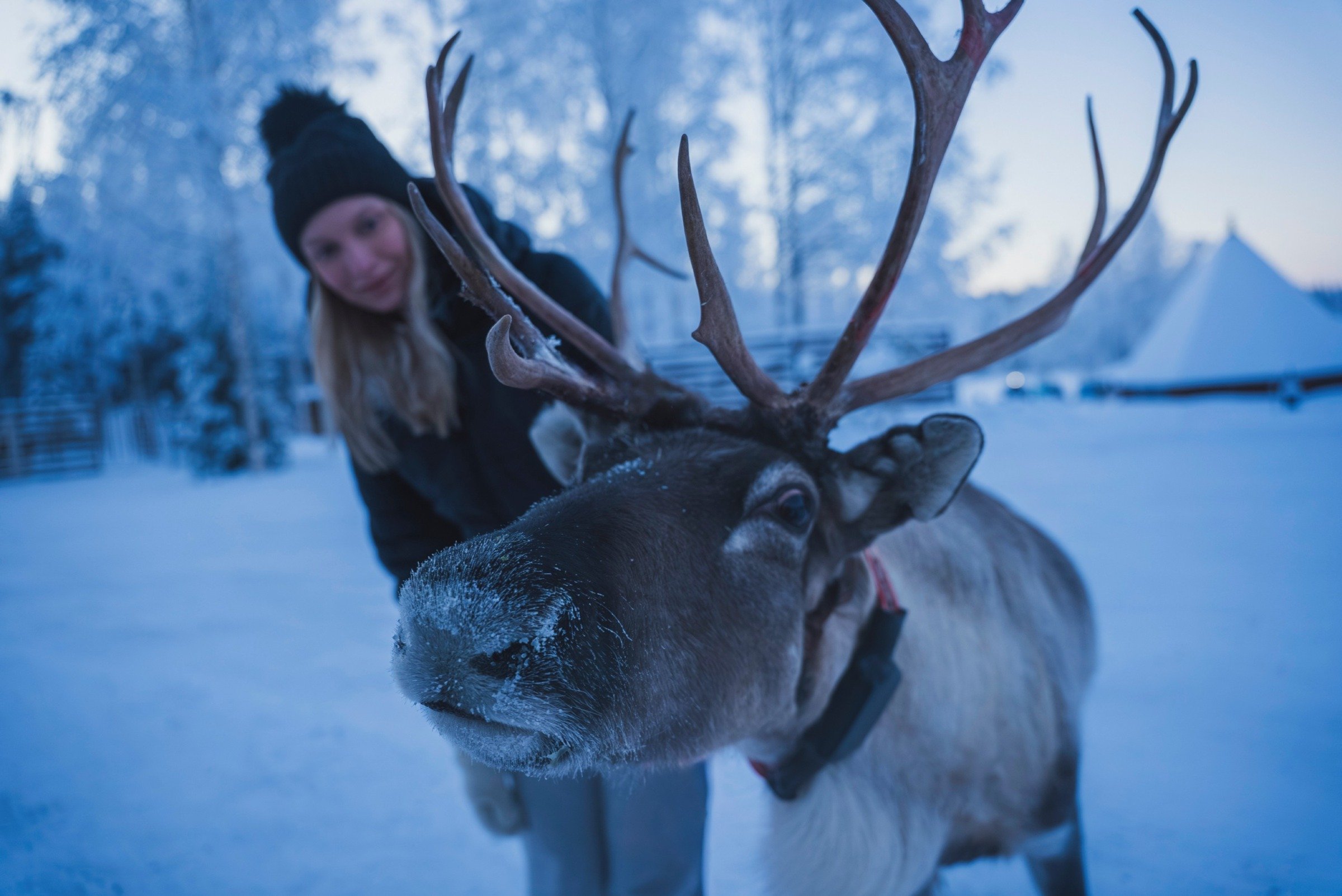
One of the most fascinating features of reindeer is their antlers, branched, bony outgrowths of the skull that are renewed every year. Unlike most deer species, both male and female reindeer grow antlers. Males develop larger sets, which they use during autumn to compete for mating contests. After the rut, they shed their antlers and conserve energy for the long winter. Females, on the other hand, keep their smaller antlers throughout winter, which helps them dig for food under the snow during their pregnancy. After giving birth in spring, they shed their antlers.
Fur: Nature Engineering at Its Best
A reindeer’s coat is another remarkable adaptation. It has two layers: a soft, dense undercoat and an outer layer of long, hollow hairs. These hairs trap air, providing excellent insulation, and even help the animals float while swimming. Seasonal changes also affect their coat colour: becoming lighter in winter and darker in summer. Thanks to these clever features, reindeer can comfortably live and thrive in Lapland’s Arctic conditions.
Between Wilderness and Human Care
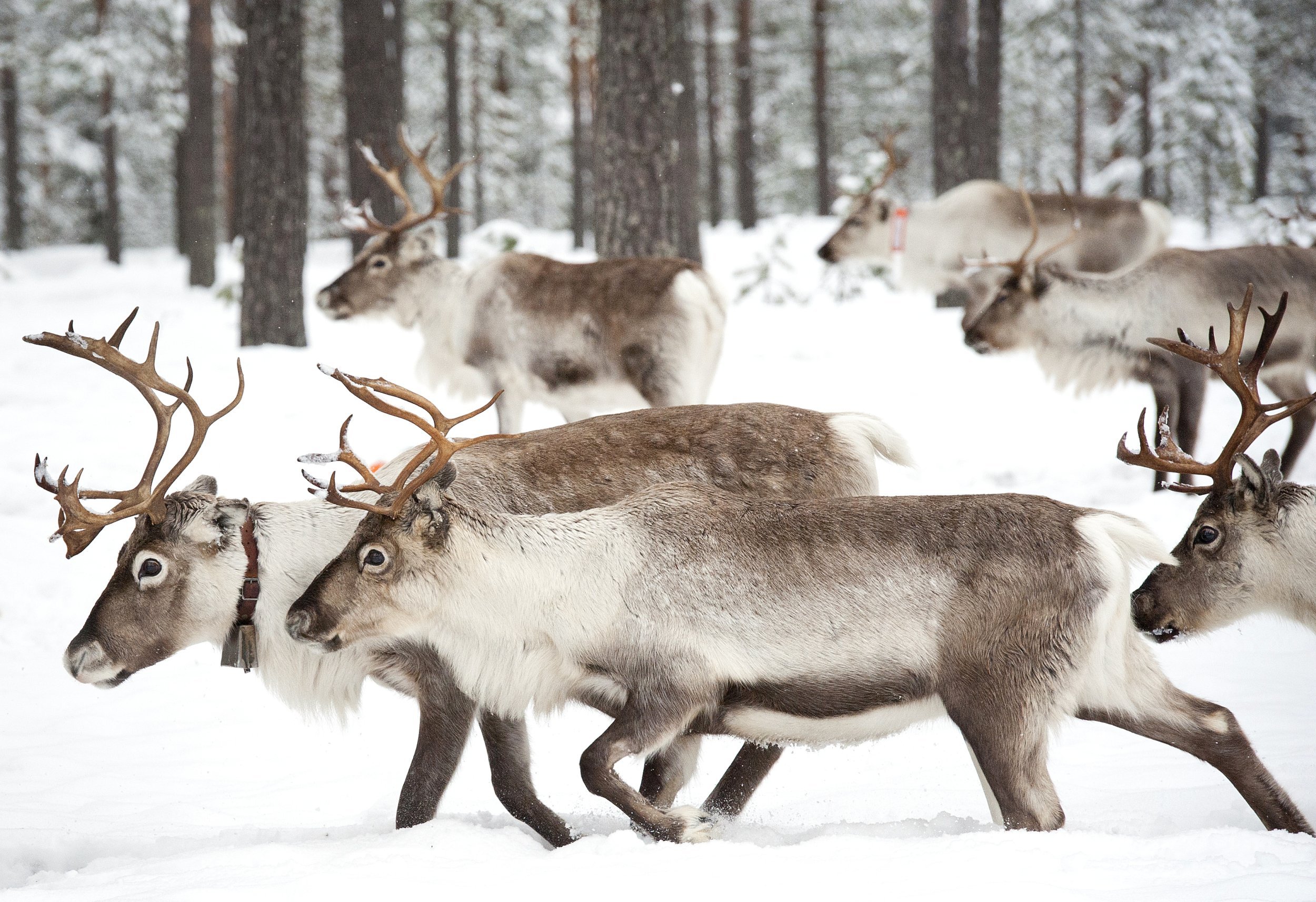
Reindeer in Lapland live between two worlds. They lead a unique life somewhere between wild animals and domesticated ones. Even though they roam freely, most reindeer are legally owned and cared for by a herder. Yet they still rely heavily on nature to remain healthy and strong. This balance is essential to their wellbeing.
During summer, reindeer are released to roam freely across forests and open lands. This period of freedom is essential, as it allows them to move naturally, strengthen their muscles, and build up energy for the long Arctic winter. Constant movement is important, as remaining inactive for too long can lead to excess fat and reduced strength.
Although reindeer may wander far, they never get truly lost. Each animal has a unique ear mark that identifies its owner, allowing herders to recognise and manage animals across large areas. In modern herding practices, some reindeer also wear GPS collars, which help herders monitor herd movements and locate animals when needed.
Winter brings a different rhythm. As snow and ice cover the ground, reindeer are gathered into winter groups and monitored more closely by herders. Most remain semi-wild in the forest, where they dig through snow to reach lichens, while reindeer used for tourism are kept closer to farms in fenced areas so they can receive daily care and feeding. When deep snow or ice makes natural grazing difficult, herders provide supplementary food such as hay or lichen to ensure the animals’ survival through the harshest months.
Life begins quickly for reindeer calves. They are able to stand and move only a few hours after birth and stay close to their mothers as they adapt to life in the Arctic. From an early age, food is central to survival. In summer, reindeer feed on grasses, herbs, leaves, and mushrooms. In winter, they rely mainly on lichens, which they dig out from beneath the snow using their hooves and antlers. Interestingly, reindeer can also see ultraviolet light, which helps them locate food and detect predators in snowy landscapes.
Encountering Reindeer: a Few Simple Rules
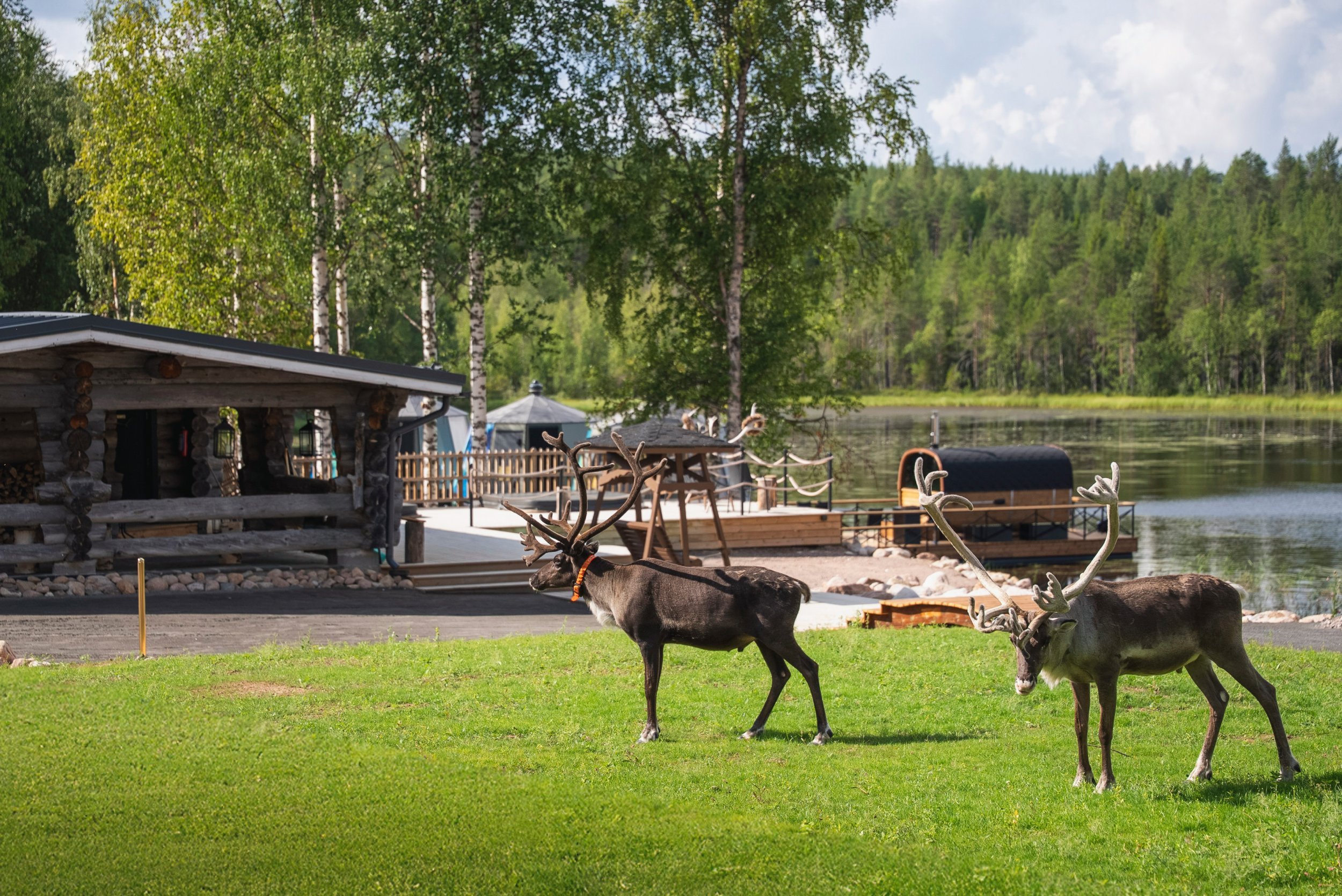
When you encounter a reindeer in the wild, the rule is simple: calmly observe and give them space. Reindeer are curious but cautious animals, and keeping your distance reduces stress for the animal and helps ensure your own safety. Watch quietly, move slowly, and resist the urge to chase or touch them. If a calf is nearby, it’s especially important to stay back, as young reindeer rely heavily on their mothers for protection.
Pay close attention to antlers, especially during the autumn rutting season. At this time of year, male reindeer can become more territorial and unpredictable, and are best admired from afar. Regardless of the season, reindeer should always be treated as semi-wild animals and approached with caution.
If a reindeer crosses the road, remain patient. These animals often move slowly, and sudden movements can startle them. Allow them to pass safely. Use your high beams to alert other drivers when necessary, but never put yourself or the reindeer at risk by stopping unsafely or blocking traffic.
In the unfortunate event of a collision, call emergency services immediately (112 in Finland). Trained reindeer assessors will respond to check the animal and take appropriate action, while also helping with insurance procedures if needed. Although these incidents are rare, knowing what to do helps protect both people and reindeer.
Reindeer and Humans: A Piece of Sámi Culture
When it comes to Lapland, reindeer have shaped life for centuries. For the Sámi people, the indigenous inhabitants of northern Finland, reindeer have long been central to survival and culture.
Reindeer offered means of transportation and guidance for seasonal life, and beyond their lifetime, their meat, antlers, skin, and bones would provide food, tools, and clothing. Families followed their herds across summer and winter territories, passing down knowledge of the land and the animals through generations. Today, around 80,000 Sámi live across the northern Nordic region, with approximately 10 percent relying on reindeer herding, keeping these traditions alive today.
Moreover, reindeer are believed to be among the last wild animals to be domesticated, a process that began around 3,000 years ago in Fennoscandia. Sámi epics tell tales of the origins of reindeer, explaining why some are wild and others domesticated. One tale speaks of two sisters who each owned a reindeer. At the end of each day, the animals gathered around their owners for care. One sister was gentle and caring, while the other treated her reindeer harshly. Eventually, the mistreated reindeer left and never returned. According to the story, wild reindeer descend from the one that fled, while domesticated reindeer come from the one that was well treated.

This connection between reindeer and humans continues today. Reindeer still shape daily life, from practical herding to Finnish culture and winter traditions, such as the whimsical image of Santa’s sleigh helpers. Modern herding may use GPS collars and vehicles, but the principles remain the same: care, observation, and respect. Their history is not just found in books. It lives on in the herds, the landscapes, and the enduring relationship between people and the land in Lapland.
Reindeer Up Close
Reindeer have become a familiar symbol of Lapland, captivating visitors from around the world. For many, spotting a reindeer for the first time along forest roads, near villages, or during winter excursions, is a memorable moment.
For those who want a closer encounter, many local companies offer a variety of activities, where you can interact more directly with the animals than during a wild sighting. You can walk a reindeer on a hike through a snowy forest or visit a farm to learn about herding traditions and feed the animals. And of course, no visit to Lapland would be complete without a sleigh ride in the forest or under the Northern Lights. Gliding through the snow alongside these peaceful creatures creates unforgettable memories!
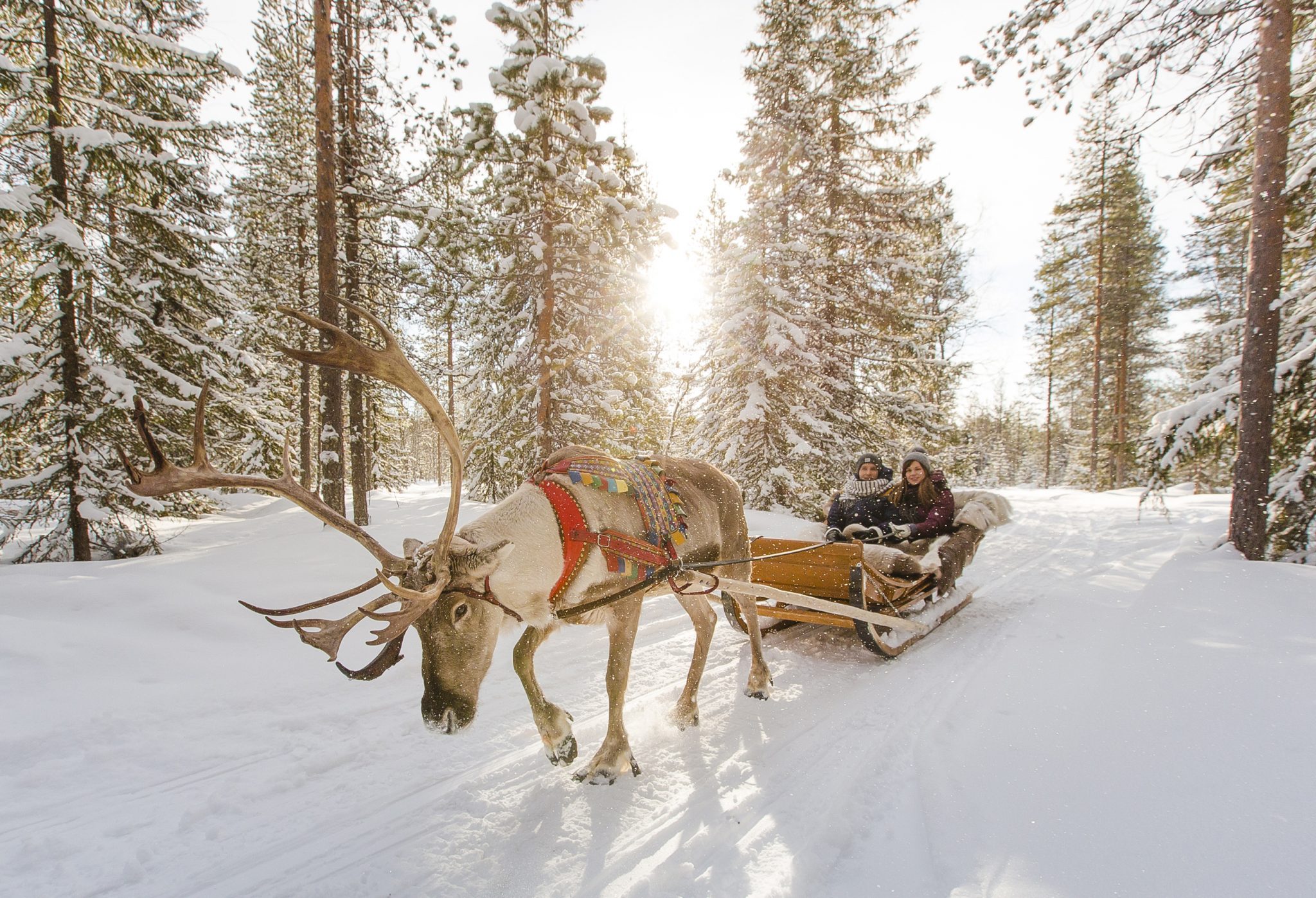
Even outside organised experiences, reindeer are an integral part of daily life. They graze in open areas, wander across quiet roads, and appear in local crafts and souvenirs, reminding us that the region’s culture and landscapes are inseparable from these extraordinary animals.
With their ingenious adaptations, gentle nature, and deep cultural roots, reindeer have undoubtedly become Lapland’s most iconic animals and one of the truest symbols of winter magic, alongside the Northern Lights and Santa Claus.